Foil, epee or saber: how a beginner picks a weapon
A $40 trial lesson, one hour, gear provided, ages 5 to adult, at Tim Morehouse Fencing Club in New Canaan.
Text us and the desk answers by text. If you call, you hear a short greeting and get a text back.
You do not have to choose a weapon before the first lesson. Tim Morehouse Fencing Club in New Canaan teaches all three, foil, epee and saber, and the coach watches a beginner for the hour of the $40 trial lesson before suggesting one. This guide is for the parent who wants to understand the choice before that conversation, not make it alone.
What the three weapons have in common
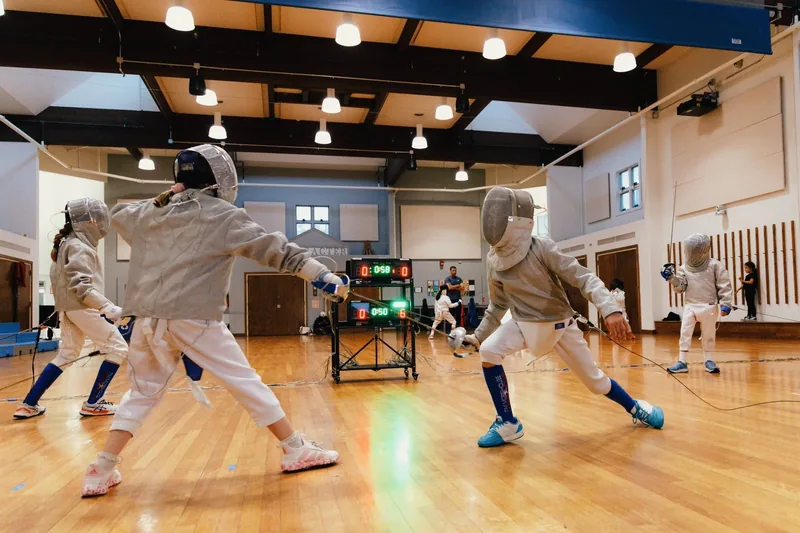
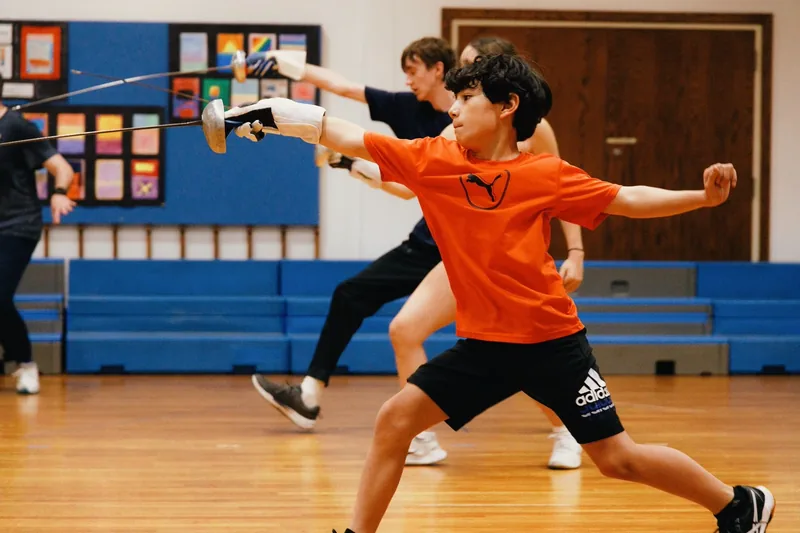
All three are fenced on the same strip, in the same mask, jacket and glove, and all three score electrically in modern fencing: a touch registers on a box, with a light, rather than on anyone's say-so. The footwork is shared. Advance, retreat, lunge and recover are the first things any beginner learns, in any weapon, and a fencer who switches weapons later keeps all of it. What differs is what counts as a hit, where on the body it counts, and whether the rules decide who gets the point when both fencers hit at once.
Foil
Foil is a thrusting weapon. Only the point scores, and only on the torso: front and back, from the collar to the groin line, not the arms, not the legs, not the head. The blade is light and flexible.
Foil has right of way. When both fencers hit at once, the rules give the touch to the fencer who started the attack correctly, and the other fencer's hit does not count. That one rule shapes the whole weapon. A foil fencer learns to recognise who holds the attack, to take it back with a parry, and to make a clean action rather than a fast one. Bouts have a rhythm of attack and answer that is easy to see from the side once you know what you are watching.
Foil rewards precision and patience, and its small target means a fencer has to hit a specific place rather than anywhere.
Epee
Epee is also a thrusting weapon, and only the point scores, but the target is the entire body: mask, arms, hands, legs, feet, everything. The blade is stiffer and heavier than a foil, with a larger guard to protect the hand, because the hand is a target.
Epee has no right of way. If both fencers hit within a fraction of a second of each other, both get a point. There is no referee's judgement about who had the attack; the box decides, and the box is impartial. That makes epee the most literal of the three weapons. It is closest to a duel in its logic: do not get hit, and hit the other fencer, and the nearest target is usually the hand or the arm reaching toward you.
Epee rewards distance, timing and nerve. It tends to be slower to watch than the other two, with long periods of probing and a sudden exchange, and it suits a fencer who thinks before moving.
Saber
Saber is a cutting weapon as well as a thrusting one. A touch scores with the edge of the blade or the point, and the target is everything above the waist: the torso, the arms, the mask, the hands. The legs are off target.
Saber has right of way, like foil, so the rules decide who gets the touch when both fencers hit at once. In practice saber is the fastest of the three. Bouts are short, explosive and loud, with a great deal decided in the first second after the referee says fence, and a saber fencer has to commit to an action rather than wait and see.
Saber rewards speed, aggression and decisiveness. It is the weapon of the club's founder, Tim Morehouse, who won Olympic silver in saber in 2008, and a parent watching a saber lesson for the first time usually understands within a minute why children find it exciting.
How the choice actually gets made
The choice is made by the coach and the fencer together, after the coach has seen the beginner move: a beginner does the trial lesson, the coach sees how they move, how patient they are, whether they attack or wait, and suggests a weapon. Nobody is locked in. A child who starts in one weapon and finds another more exciting a year later can change, and the footwork comes with them.
What a parent can usefully do before the trial is notice their child's temperament. A child who wants to go first, every time, often takes to saber. A child who likes a puzzle and does not mind waiting for the right moment often takes to epee. A child who enjoys doing a thing correctly, and will practise one action until it is clean, often takes to foil. None of this is a rule, and the coach's view after an hour on the strip beats all of it.
What the weapon changes for a family
The weapon changes which classes a fencer attends once they have chosen one, and that is a conversation with the coach rather than a decision made at home. It changes the gear a fencer eventually buys: a foil, an epee and a saber are different blades, the saber mask has a conductive top, and the foil and saber jackets are worn with a conductive overjacket called a lame. None of that is bought for the trial lesson, where everything is provided, and the coach says what to buy first and what can wait.
It also changes what competing looks like, for a fencer who gets that far. USA Fencing runs events by weapon and age group, and the club's competitive team fences under the club's name. That is a conversation for later, with the coach, not for the first week.
Questions people actually ask
Which weapon is best for a five-year-old?
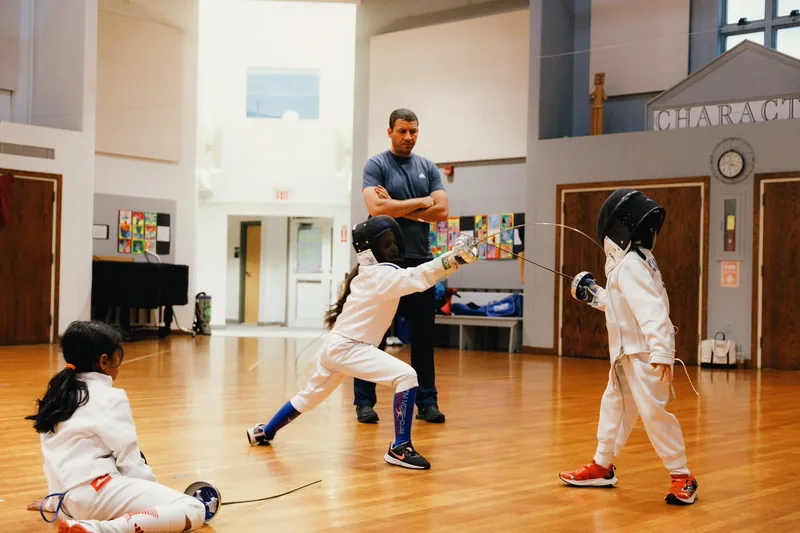
The one the coach suggests after the trial lesson. For very young beginners the first weeks are footwork, balance and learning to hold any weapon safely, and the weapon matters less than whether the child enjoys the hour. Tell the desk the child's age when you text and the coach knows before you arrive.
Can my child switch weapons later?
Yes. The footwork, the distance and the habits of the strip carry across all three weapons, and a fencer who changes keeps them. What changes is the blade, some of the gear and the rules of the target. Fencers do switch, and the coach will say when it makes sense.
Which weapon is the safest?
All three are fenced in the same mask, jacket and glove, and the trial lesson provides all of it. Fencing is a sport with very low injury rates relative to how it looks, in any weapon, because the equipment is designed around the weapon being used against it. The coach's supervision in the first lessons matters more than the choice of weapon.
Does the club favour saber because of its founder?
The club teaches all three weapons. The founder's weapon is saber, and he won Olympic silver in it in 2008, but a beginner is not steered toward it. The coach's suggestion after the trial is based on the fencer in front of them.
Do we need to buy a weapon for the trial lesson?
No. The trial lesson at the New Canaan club is one hour for forty dollars with the mask, jacket, glove and weapon provided. Buying a weapon is a conversation after the trial, once a fencer has chosen one with the coach, and the coach says what to buy first.