What to expect at a first fencing lesson
A $40 trial lesson, one hour, gear provided, ages 5 to adult, at Tim Morehouse Fencing Club in New Canaan.
Text us and the desk answers by text. If you call, you hear a short greeting and get a text back.
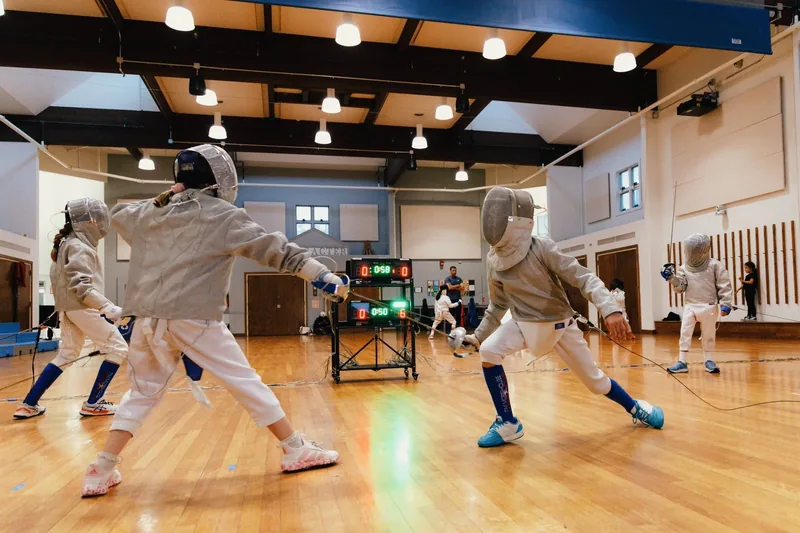
A first fencing lesson at Tim Morehouse Fencing Club in New Canaan is one hour, costs $40, and the club provides the mask, jacket, glove and weapon. You bring sneakers, long athletic pants, a t-shirt and water. That is the whole list. This guide walks through what happens in the hour, for a child from age five or for an adult, and what you decide afterwards.
What to wear
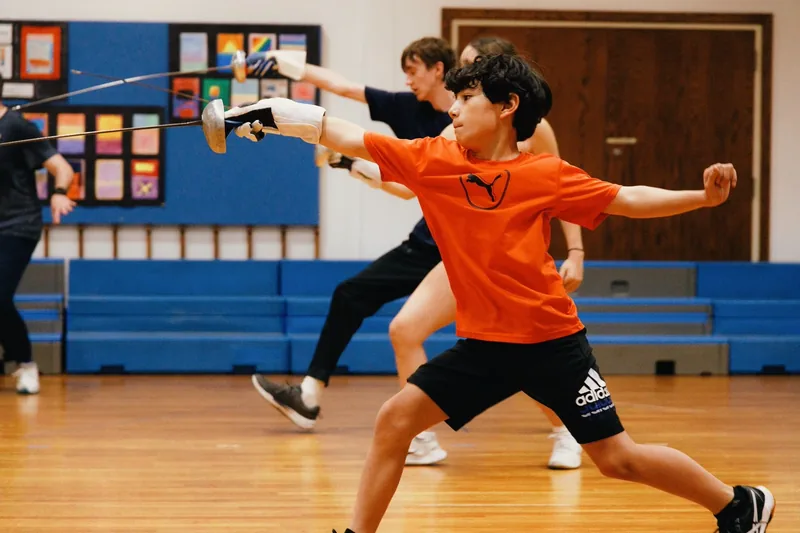
Sneakers with a clean, non-marking sole. The lesson is on a gym floor, and the footwork is the first thing taught, so the shoes matter more than anything else you bring. Long athletic pants or sweatpants rather than shorts: the jacket covers the torso and arms, and long pants cover the legs. A t-shirt under the jacket. Long hair tied back so the mask sits properly. Take off watches, rings and dangling earrings before you get on the strip.
Bring a bottle of water. An hour of footwork is more work than it looks from the side, and the jacket is warmer than a t-shirt. A small towel is not a bad idea for an adult. A child does not need one; a child needs the water.
Nothing else. Do not buy a weapon, a mask or a glove for the trial. The club provides all of it, and if the fencer carries on the coach will say what is worth buying first and what can wait.
What the club provides
The mask, the jacket, the glove and the weapon. For a trial lesson that is everything a beginner needs to be on the strip safely. The mask is the piece parents ask about most: a fencing mask is a steel mesh that the blade cannot pass through, with a padded bib over the throat, and it is fitted before anyone picks up a weapon.
What happens in the hour
A typical first hour in the sport, in any club, has the same shape, and the New Canaan club's trial lesson follows it. The coach paces it for the age in front of them: a five-year-old's hour and an adult's hour are not the same hour.
Footwork first
The on-guard position, the advance, the retreat and the lunge. This is the foundation of every weapon and most of the first lesson is spent on it, usually without a weapon in hand at first. It feels strange for ten minutes and then it starts to make sense.
Then the grip and the target
How to hold the weapon, how to extend the arm, and where on the other fencer a touch counts. Which weapon the beginner holds in the trial is the coach's call, and nothing about it is permanent. Foil, epee or saber explains the three.
Then a few touches
The point of the hour. The beginner gets to extend, lunge and land a touch on a target, usually the coach, and to feel the thing that makes people fence. For a child this is the part they talk about in the car. For an adult it is the moment the footwork stops feeling like a drill and starts feeling like a reason to have done the drill.
Then the conversation
At the end, the coach has seen the beginner move for an hour and has a view: on the weapon, on which group fits, and on whether this is a sport the fencer wants. That view, and the desk's text with this week's times, is what you decide from.
What to decide afterwards
Nothing has to be decided on the day. The trial lesson commits you to nothing. If the fencer wants to carry on, text the desk and it books the first classes; if the coach suggested a weapon, the desk notes it. If the fencer does not want to carry on, that is a complete answer, and forty dollars and an hour is a cheap way to find it out.
Classes, private lessons and camps explains what the next step can look like for a child, a teen or an adult. Class times change by season, so the desk sends you this week's times rather than this page printing a timetable.
If the fencer is five, six or seven
The club takes children from age five. For the youngest beginners the hour is shorter pieces: footwork as a game, balance, learning to hold a weapon safely and put it down safely, and a few touches at the end. Tell the desk the child's age when you text and the coach knows before you arrive. If you are not sure a five-year-old will last an hour, say so; the coach has seen that before.
If the fencer is an adult
Adult beginners start with the same hour. Adults who fenced at school or college and stopped can say so, and which weapon, and the coach starts from there rather than from the beginning. Do not be put off by the age of the other beginners on this site; the club takes adults from complete beginners up, and the hour is paced for whoever is in it.
Where and how to book
Tim Morehouse Fencing Club at New Canaan Country School, 635 Frogtown Rd, New Canaan, CT 06840. Text the desk at TRACKING_NUMBER_PENDING with who the lesson is for and their age, and the desk texts back the next open trial slot, the entrance and parking details, and the list above. Drive times from each town.
Questions people actually ask
What should my child wear to a first fencing lesson?
Sneakers with a clean sole, long athletic pants or sweatpants, a t-shirt and hair tied back. The club provides the mask, jacket, glove and weapon for the trial lesson. Bring water. Do not buy any equipment before the trial.
Can I watch?
Ask the desk when you book. Whether parents watch from the side of the gym, and from where, is the club's call and depends on the group and the space on the day. The desk tells you what the club has said before you arrive rather than you finding out at the door.
How long is the trial lesson and what does it cost?
One hour, for forty dollars, with all the gear provided. It commits you to nothing. What classes, private lessons or camps cost afterwards depends on the age group and the season, and the desk texts you the current figures when you ask.
Will my child get hurt?
Fencing has a low injury rate for a sport that looks the way it does, because the mask, jacket and glove are designed around the weapon being used against them, and a beginner's first lessons are closely supervised. The club fits the mask before anyone picks up a weapon. Bruises happen in any sport; that is the usual extent of it.
Do we have to pick foil, epee or saber before the lesson?
No. The club teaches all three, and the coach suggests one after seeing the beginner move for an hour. Our guide on the three weapons explains what each one rewards, but the coach's view after the trial is the one to go with.